A carry-on-only trip is not a minimalism contest. It is a way to walk off the plane and start the trip the same day—no carousel, no “your bag will arrive tomorrow,” and no scramble at the gate because a budget fare charges extra for a checked bag. The aim is a bag you can actually live out of for a week or two, built around your airline’s rules and a small set of clothes that all work together.
This list is for a typical 7- to 14-day international trip. Adjust for climate, laundry access, and any activities you have already booked. Confirm current security rules and your ticket’s baggage allowance before you zip the bag shut; both can differ by airline, airport, and fare.
Start with your airline’s rules, not a generic list
Carry-on size and weight limits are not universal. Some airlines publish a weight limit and enforce it at the gate. Others care more about dimensions. Many fares include one carry-on plus a smaller personal item; some cheaper fares include only the personal item. “It usually works” is not a plan if you are connecting onto a carrier with strict sizers.
Before you pack, write down:
- The maximum dimensions for a cabin bag, and whether wheels and handles are included in that measurement
- Any published weight limit
- Whether a personal item (under-seat bag) is included in your fare, and its size limit
- Whether your fare already includes a checked bag—if it does, carry-on only is a preference, not a requirement
If your airline lists a weight limit, weigh the packed bag at home. It is easier to edit a stack of shirts in your bedroom than at a gate scale.
The packing principle
Three decisions do more than any product list:
- Wear the bulky stuff. Heavier shoes and your warmest jacket go on your body, not in the bag.
- Build a small capsule. Stick to two or three colors so every top works with every bottom. If you would not wear it at least twice, leave it.
- Plan on laundry for anything longer than a week. A sink wash mid-trip, or one machine load at a lodging or laundromat, is what makes 10–14 days realistic in a cabin bag.
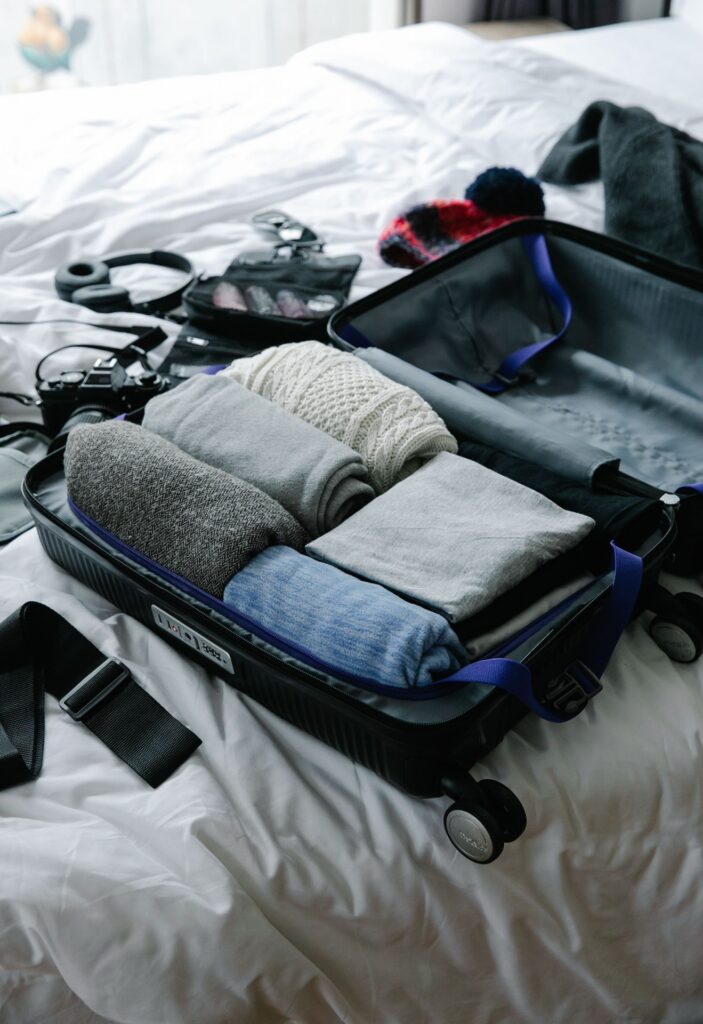
Packing cubes help you find things and keep dirty clothes separate. They do not create space that was not there. Compression helps a little; editing helps more.
What belongs in the personal item
Treat the under-seat bag as the one that cannot leave your side. If the overhead bag is gate-checked on a full flight, this is your first night and your documents.
- Passport, plus any visa or travel authorization you were told to carry in print or on your phone
- A photo of the passport biographic page stored offline, and a paper copy in a different pocket
- The name, address, and phone number of your first night’s lodging—helpful for immigration forms and for a taxi or rideshare if your phone is slow to connect
- Travel insurance policy number and the assistance phone number, if you purchased a policy (see our guide to what travel insurance actually covers)
- Two payment cards, ideally ones you have already checked for foreign-transaction fees in your own card terms, plus a small amount of destination cash if you can obtain it in advance—or a plan to use a reputable ATM on arrival
- Prescription medications in original labeled containers, plus a written list of the names and doses
- Glasses or contacts (and a backup pair of glasses if you depend on them)
- Phone, cable, and a power bank (spare lithium batteries generally belong in the cabin, not a checked bag—confirm current airline rules)
- One full change of clothes and a small pouch of toiletries, in case the carry-on is taken at the gate
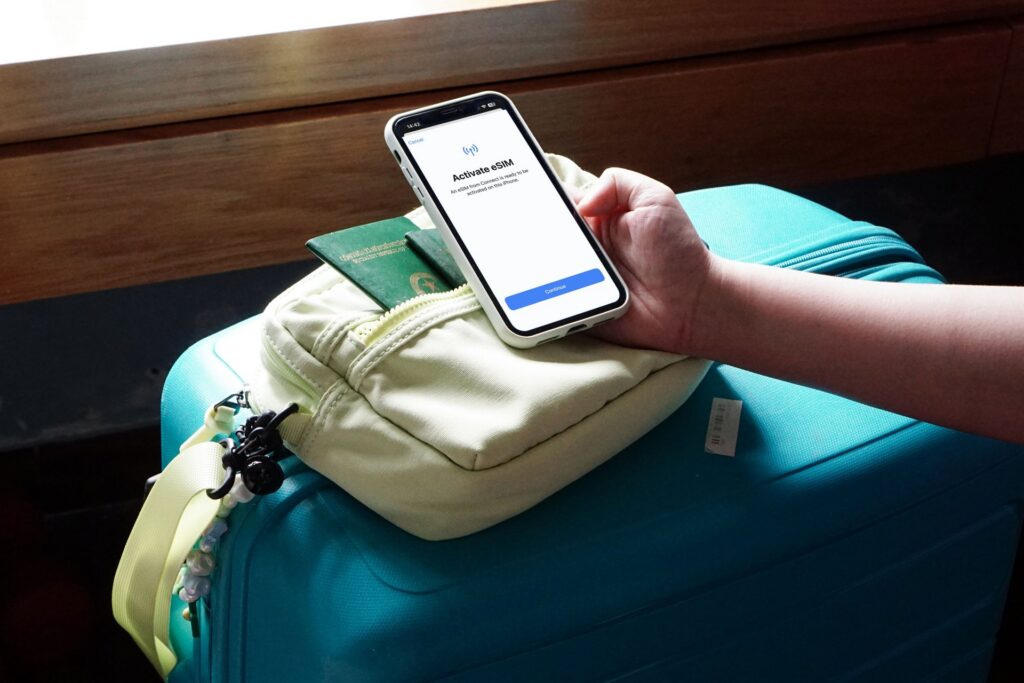
This is also where an eSIM or roaming plan pays off: install and test it before you leave home, so you are not relying on airport Wi‑Fi to reach your lodging.
A clothing list for 7–14 days
Use this as a default, then swap pieces for weather rather than adding a third pair of shoes.
- 4–5 tops (a mix of short sleeves and one longer layer)
- 2 bottoms (for example, one pair of trousers and one pair of shorts, or two trousers in cooler months)
- 1 nicer piece for a dinner or a house of worship—a shirt, a knit, or a simple dress that also works during the day
- 1 sweater or fleece (wear it on the plane if it is bulky)
- 1 packable rain shell
- Underwear for a week, plus 5–7 pairs of socks (fewer if you will do laundry)
- Sleep clothes
- A swimsuit if there is any realistic chance you will use it
- Two pairs of shoes: the pair you wear, and one lighter pair that packs flat (sandals or a second pair of sneakers). Do not pack a third “just in case” pair unless a booked activity truly requires it
- Optional: a scarf or buff for warmth, sun, or modest dress codes
Choose fabrics that dry overnight if you might wash them in a sink. Merino or synthetic blends are easier to live with than heavy cotton, but the best fabric is the one you already own and will actually wear.
For colder trips, add warmer socks and a real insulating layer. Do not solve cold weather by packing more shoes. For hot, humid trips, favor the rain shell over a jeans-and-sweater combo you will not touch.
Toiletries and liquids
In the United States, TSA’s commonly published 3-1-1 rule limits liquids, aerosols, and gels in carry-on bags to containers of 3.4 ounces (100 milliliters) or less, all fitting in one quart-sized clear bag. Many airports elsewhere use a similar 100-milliliter container limit, but tray procedures and exceptions change. Check the current rules from TSA and from any country you transit.
Practical ways to keep that bag honest:
- Use solid shampoo, conditioner, and deodorant where you can, so they do not count against the liquids bag
- Decant sunscreen, cleanser, and toothpaste into small bottles you refill at home; do not pack full-size bottles “just in case”
- Put a little of what you need in the personal item, and the rest in the carry-on
- Medications may be treated differently from toiletries—confirm current rules rather than guessing at the checkpoint
You can buy soap, toothpaste, and basic pain relievers in most cities. Pack the things that are hard to replace in a hurry: prescriptions, a familiar blister treatment, and any specific sunscreen or contact solution you cannot easily match abroad.
Electronics, without a kit that eats the bag
- Phone and charging cable
- One compact travel adapter that covers the regions you are visiting—not a handful of single-country plugs
- A power bank, packed in the cabin
- Headphones
- An e-reader or tablet only if you will use it
- A laptop only if you will actually work; otherwise leave it
If you use a bag tracker, put it in the carry-on before you leave for the airport. Photograph the bag’s exterior so you can describe it if it is delayed.
A worked example: 10 days, mixed weather
Say you have 10 days with cool mornings, mild afternoons, and a fair chance of rain. You will do one sink or machine wash around day five.
- Wear: walking shoes, jeans or trousers, a sweater, rain shell in a tote or over the arm if the cabin is warm
- In the carry-on, one packing cube: four tops, a second bottom, sleep clothes, underwear and socks for a week
- Second cube or pouch: toiletries (3-1-1 bag), medicines, adapter, cables, a packable pair of shoes
- Personal item: documents, phone kit, one shirt and underwear, a small toiletry pouch, any irreplaceable items
That is enough for daily wear, one nicer dinner, and a rainy walk. The mid-trip wash is what makes it through day 10, not a second suitcase.
What to leave behind
- A “just in case” formal outfit with no event on the calendar
- Extra shoes
- Full-size liquids and a bulky towel (most lodgings provide towels; confirm if you are in a hostel or a rental that may not)
- Multiple heavy guidebooks; download offline maps and save a short list of places instead
- Gear for a hobby you have not actually scheduled
Leave a little space—or plan to wear a new item home—if you think you will bring souvenirs. A bag packed to the zipper on day one has no room for a second week of dirty laundry, let alone a gift.
FAQ
Can you really do two weeks with only a carry-on?
Yes, if you will wash clothes once and you stick to a capsule wardrobe. Two weeks without laundry is how people end up checking a bag they did not need.
What if the gate agent takes my carry-on?
That is why documents, medicines, a change of clothes, and chargers live in the personal item. Put a name tag on the carry-on and wait at the jetway or the baggage claim as the airline instructs.
Do I need packing cubes?
No, but they make a small bag easier to live out of, especially in tight rooms. One cube for clean clothes and one bag for laundry is enough.
How do I handle liquids on a long-haul flight?
Follow the security rules for every airport on your itinerary, not only your departure city. Keep the clear bag easy to pull out. After security, you can put it away until the next screening.