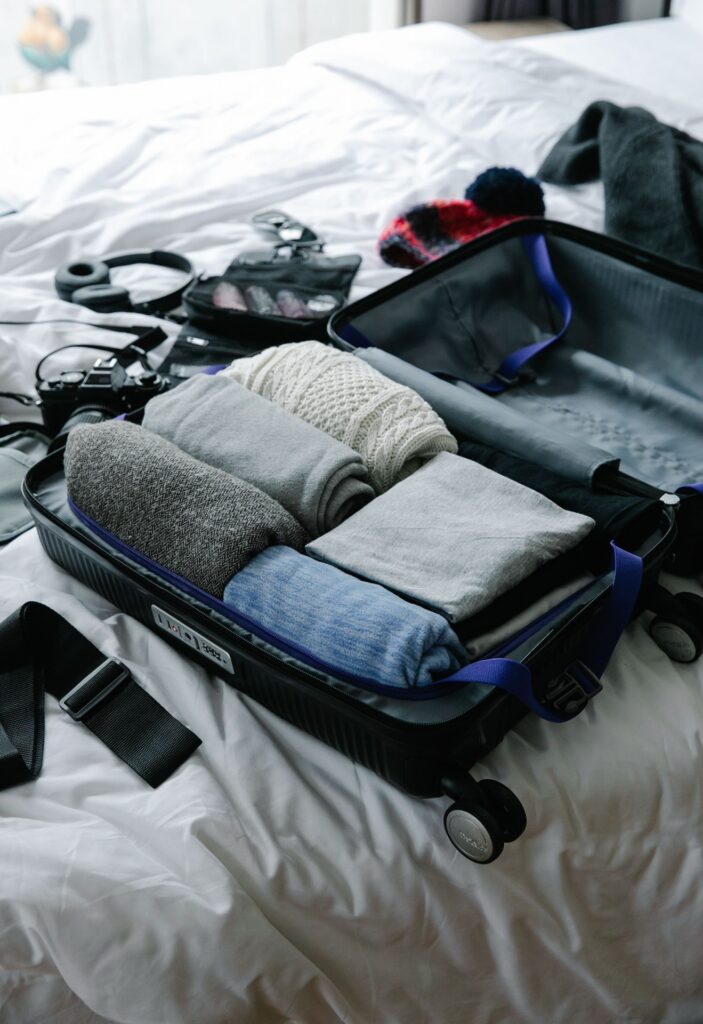
A weekend trip can disappear in the middle. You leave after work on Friday, arrive late, sleep in, spend Saturday crossing town for a reservation, and check out Sunday morning with a long drive still ahead. You were gone, but you were never really there. Forty-eight hours is enough time for a trip to feel like a trip—if you protect the edges and stop trying to fit a week into a weekend.
This is a pacing plan for a short getaway close to home or a short flight away. It works for a small town, a park, a city neighborhood, or a cabin. The goal is not to “maximize” the weekend. It is to come home on Sunday with one good meal, one stretch of unhurried time, and the feeling that you left.
Protect Friday, or admit that the trip starts Saturday
The quiet difference between a weekend that works and one that does not is when you actually arrive. A Friday departure that leaves three hours of traffic, a late check-in, and a tired arrival is a Saturday-morning start in disguise. That can still be worth it—but then plan Saturday and Sunday as the trip, and do not also expect Friday night to be magical.
If you can, do one of the following:
- Leave early enough on Friday to arrive before dinner, even if that means taking an afternoon off or packing the night before
- Stay Thursday night if the destination is farther than a comfortable evening drive
- Choose a place you can reach in a short, predictable amount of time, and save the ambitious transfer for a longer trip
Pack before Friday morning. A small bag is enough for two nights; if you want a simple list to work from, use a reduced version of our carry-on packing approach: one nicer outfit, one casual outfit, the shoes you wear, and a layer for weather. Friday-you will not want to stand in front of a closet making decisions.
One base, one neighborhood
For a weekend, unpack once. Two lodgings in two nights turns the trip into check-in logistics. Choose a base you are happy to walk from, or a cabin or inn you are happy to stay close to.
In a town or city, that means picking a neighborhood and letting it be enough: a place to walk in the morning, a place to eat, a short list of things within easy reach. In the countryside, it means resisting the urge to spend Saturday in the car “seeing the area” for hours at a stretch. A drive can be part of the day. It should not be the day.
Book the lodging first, with a clear arrival time and a clear checkout time. If late checkout is offered and you have a long Sunday return, it can be worth more than an extra activity. If checkout is early, plan a last walk or a breakfast that does not depend on still having the room.
Give Saturday a single main thing
Saturday is the only full day you have. It is tempting to fill it. Don’t, at least not to the edges.
Pick one anchor for the day: a hike, a long morning at a market, a museum, a stretch of coastline, a long lunch in a nearby town. Do that thing at the best time of day for it—early for a trail or a popular street, later for a meal that should not be rushed. Then leave the rest of the day unscheduled on purpose.
A good Saturday often looks like this:
- A slow morning close to where you are staying (coffee, a short walk, no alarm if you arrived late)
- The anchor, with enough time around it that you are not watching the clock
- An open late afternoon: a nap, a bookstore, a second walk, sitting outside
- Dinner nearby, not across town at the rush hour
If you add a second “must,” put it on a different part of the day and keep it close to the first, or save it for Sunday morning. Two ambitious anchors in opposite directions is how Saturday becomes a commute.
Eat as if you have time
Food is often the memory of a short trip, and it is also where weekends get over-planned. One reservation you care about is plenty. Let the other meals be close and simple: a bakery breakfast, a picnic after a walk, a counter lunch.
If you do not know the town, use the same approach you would in a larger city—walk a block off the obvious street and look for a short menu and a room with locals in it. Our guide to finding good local food when you don’t know the city works on a two-day trip as well as a two-week one.
Bring a little food for the road so Friday night and Sunday afternoon are not decided by whatever is next to the highway. You do not need a full cooler. You need enough that hunger does not make the schedule for you.
A Sunday that is not a scramble
Sunday has a hidden cost: the return. Build it backward from the time you need to be home, then add a buffer for traffic, a delayed train, or a full tank of gas.
What remains is your Sunday morning. Use it for something that belongs to the place, not for packing in a leftover attraction from Saturday:
- A walk or a short trail while the bag is still in the room
- A sit-down breakfast or a market stop
- One small shop or bookstore, if that is the pleasure of this town
Pack before you go out Sunday morning, or at least pack most of it Saturday night. Checkout is a poor time to find out you cannot find a charger. If the drive is long, eat first and stop once, rather than leaving so late that the whole afternoon is a frustrated arrival home.
The trip is allowed to end a little early. A calm return is part of the weekend feeling; a Sunday night that starts exhausted is how the getaway gets forgotten by Tuesday.
A 48-hour template you can reuse
Adjust the hours to your departure point. This is a shape, not a timetable.
- Friday: Bag is packed in the morning. Leave early enough to arrive for a late dinner, or accept a late arrival and go straight to the lodging. Short walk if you have the energy. Lights out.
- Saturday: Unhurried morning. One anchor late morning or midday. Free late afternoon. Dinner near the base.
- Sunday: Pack, one last local morning, checkout, and a return that still leaves you a little evening at home.
If the weather turns, the template still works: swap the outdoor anchor for a long breakfast, a museum, a spa, a movie, or a bookstore, and keep the empty afternoon. The weekend does not have to be scenic to be a break. It has to be unhurried.
What to skip on a short trip
- A second lodging
- A long day trip that spends more time in transit than at the destination
- A packed list of “hidden gems” that are not near each other
- Working “just for an hour” on Saturday morning, if you can possibly leave the laptop at home
- A late Saturday night that steals Sunday morning, unless that night is the actual point of the trip
If someone wants to meet you for a full Saturday of errands in the destination, that is a visit, not a getaway. You can say yes, but then do not also expect the weekend to rest you.
FAQ
How far is too far for a weekend?
If the one-way trip regularly takes more than about four hours door to door, Friday night is likely to be a write-off and Sunday will be long. It can still be worth it for a special place, but plan it as one full day plus two travel edges, not as two and a half leisurely days.
Should I book everything in advance?
Book the lodging, and book the one restaurant or timed activity that will sell out. Leave the rest open so the weather and your energy can decide.
Is a staycation a failure of imagination?
No. If getting out of town is more stress than you can take this weekend, one night in a nearby hotel, or a planned day with your phone put away, can still be a break. The method is the same: one anchor, protected time, no errands.
What if I am traveling with people who want to do everything?
Agree on the Saturday anchor before you go, and agree that the afternoon is optional. A weekend is a poor time to discover that half the group expected a rest and the other half expected an itinerary of six stops.